Netflix is stepping decisively into the physical world by transforming vacant department store spaces inside shopping malls into large-scale experiential entertainment venues, marking a significant evolution in how digital content brands engage audiences offline. The initiative, branded as Netflix House, reflects the company’s growing focus on immersive, fan-driven experiences while simultaneously addressing the decline of traditional mall anchor tenants.
The first Netflix House locations are being rolled out in major U.S. retail hubs, including Galleria Dallas in Texas and the King of Prussia Mall near Philadelphia. Each venue spans close to 100,000 square feet, occupying former department store spaces that once defined mall footfall. A third location is already planned for Las Vegas in 2027, signaling Netflix’s long-term commitment to scaling the concept rather than treating it as a temporary activation.
Unlike conventional retail stores or pop-up experiences, Netflix House is designed as a permanent entertainment destination inspired by the platform’s most popular global franchises. Visitors are invited to step inside environments drawn from series such as Stranger Things, Squid Game, Wednesday and One Piece, engaging with interactive installations, games and story-led challenges that bring on-screen narratives into real-world form. Entry into the venue itself remains free, while individual experiences are ticketed, creating a hybrid entertainment and revenue model.
Each location is tailored differently, reinforcing the idea that Netflix House is a flexible experiential format rather than a fixed template. The Dallas venue leans into arcade-style gaming and social play, while the Philadelphia site incorporates virtual reality attractions, themed mini-golf, theatre spaces and immersive food and beverage offerings inspired by Netflix IP. Merchandise and collectibles tied to popular shows further extend the experience, allowing fans to take a tangible piece of the brand home.
For mall owners and real estate developers, Netflix House represents a compelling alternative to declining department store anchors. As traditional retail struggles to draw consistent foot traffic, experiential tenants are increasingly viewed as critical to repositioning malls as lifestyle and entertainment destinations rather than shopping-only spaces. Concepts like Netflix House are designed to attract younger audiences, encourage longer dwell times and create reasons for repeat visits, reshaping the economic logic of physical retail environments.
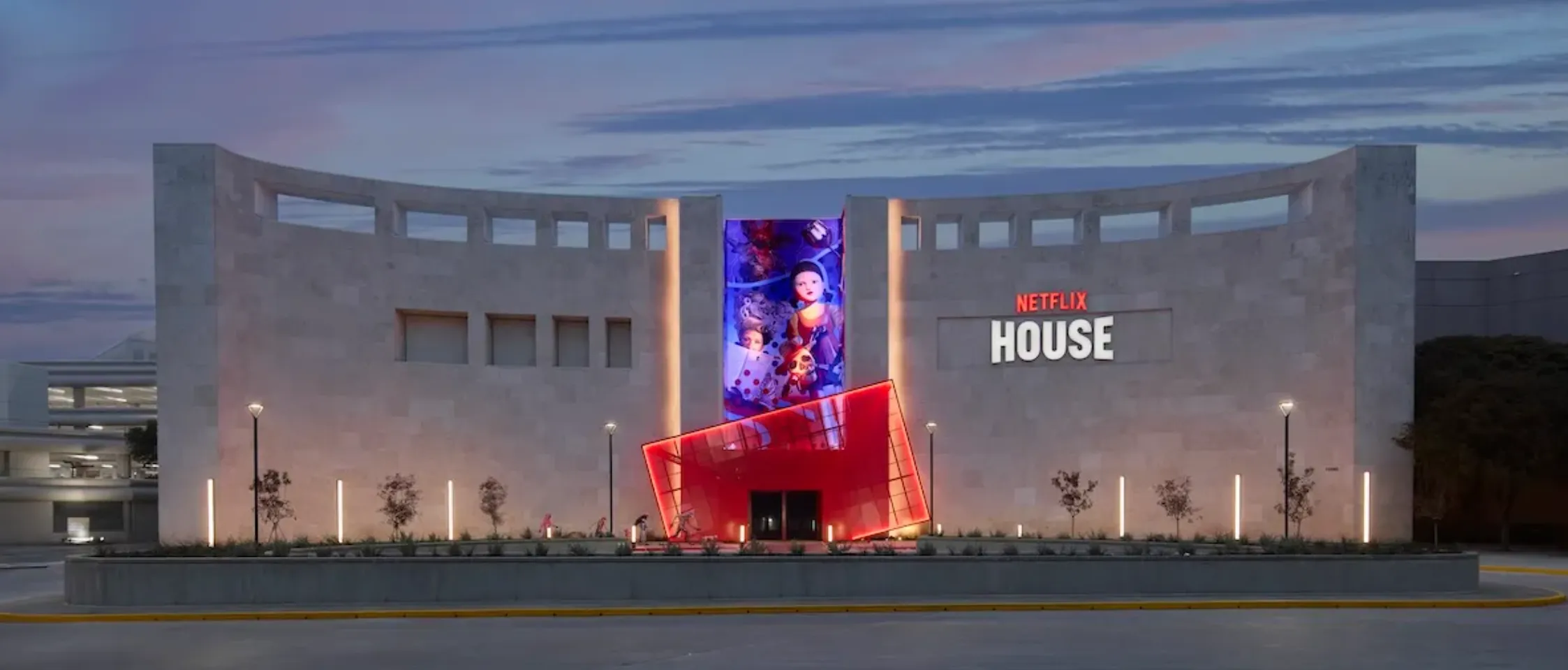
For Netflix, the move builds on years of experimentation with live, location-based experiences, including immersive Stranger Things installations and drive-through events launched during the pandemic. Those early experiments demonstrated the appetite for real-world interaction with digital IP and laid the groundwork for a more permanent, scalable experiential format. Netflix House now functions as a physical extension of the platform’s storytelling universe, deepening emotional engagement beyond the screen.
The initiative also underscores a broader shift within the experiential economy, where content companies are no longer limited to distribution through screens alone. By turning fandom into participatory entertainment and empty retail into cultural infrastructure, Netflix is positioning itself not just as a streaming service, but as a full-fledged entertainment brand with a presence across physical and digital worlds.
Ultimately, Netflix House illustrates how experiential venues are emerging as a powerful bridge between entertainment, retail reinvention and community engagement. As malls continue to search for relevance and consumers increasingly value experiences over transactions, the transformation of vacant department stores into immersive storytelling spaces may well signal the future of both entertainment and physical retail.

