A year and a half after the fall of the Assad regime, Syria still appears to be grappling with numerous internal challenges. On the one hand, the country is benefiting from partial sanctions relief, growing interest from foreign investors, and efforts to rebuild its governmental and security institutions. On the other hand, behind these signs of recovery lies a far more complex reality: institutional weakness, political centralization, sectarian tensions, persistent terrorism, and the absence of oversight and transparency mechanisms.
An examination of recent developments indicates that Syria’s central problem is not a lack of opportunities, but rather a lack of the capacity to translate those opportunities into long-term stability.
Economic Normalization with the West – and a Harder Line Toward Israel
One of the most notable developments during May 2026 occurred in the field of economic legislation. While Syria is seeking to attract foreign investment, rebuild its relations with the Gulf states, and reintegrate its economy into the regional and international systems, it has simultaneously chosen to harden its stance toward Israel and re-anchor this policy in law.
The new Customs Decree (No. 109) of 2026 is not merely a technical update of customs regulations. Several of its provisions frame the boycott of Israel as a matter of national security. The law completely prohibits the entry of goods of Israeli origin, grants extensive enforcement powers to customs authorities and the courts, and even places the smuggling of Israeli goods in the same legal category as arms and drug smuggling.
This move carries significance beyond the economic sphere. It indicates that despite the political and economic changes taking place in Syria, the new regime is not currently seeking to alter the foundations of Syrian foreign policy toward Israel. On the contrary, it has chosen to reaffirm them precisely at a time when other countries in the region are advancing regional cooperation, trade agreements, and normalization processes.
Furthermore, the legislation reflects one of the central dilemmas facing the new Syria. On the one hand, the country seeks to present itself as an attractive destination for investment and a responsible economic partner. On the other hand, it continues to rely on national security and nationalist rhetoric to consolidate domestic legitimacy. The use of the term “national security” in the context of Israeli products is not merely a political statement, it is also a political tool intended to unite different groups within Syrian society around a common external reference point at a time when internal cohesion remains fragile.
It is also possible that Syria intends to send a message in the context of the stalled negotiations regarding security arrangements with Israel.
From an Israeli perspective, this serves as a reminder that the weakening of the Iranian axis or the fall of the Assad regime do not necessarily lead to a fundamental change in perceptions of Israel in Damascus. Although the new regime has adopted a more pragmatic approach toward the international community in many respects, its attitude toward Israel remains rooted in a discourse of confrontation, boycott, and national security.
Economic Reconstruction Without Social Recovery
The most striking gap today is the one between the discourse of economic reconstruction and the daily reality faced by Syrian citizens. Despite economic deals, promises of foreign investment, partial sanctions relief, and President Ahmad al-Sharaa’s declaration that by 2027 no displaced persons would remain in tents, the reality on the ground remains far from that goal. According to UNICEF data, approximately 1.4 million displaced persons were living in camps across Syria at the beginning of 2026, while estimates by humanitarian organizations operating in northern Syria indicate that around 2.2 million people still reside in camps and informal tent settlements. These figures illustrate the gap between the political and economic progress presented by the regime and the living conditions of millions of Syrians, for whom the benefits of reconstruction remain out of reach.
The World Bank’s estimate that rebuilding Syria will cost approximately $216 billion highlights the scale of the challenge. Money alone is not enough. International investors continue to point to a fundamental problem: the lack of regulatory certainty, insufficient transparency, a weak judicial system, and a shortage of bankable projects. Without reliable institutional mechanisms to protect investments and enable long-term planning, it is difficult to see how international interest will translate into investment on the scale required.
At the same time, reductions in international humanitarian assistance are deepening the social crisis. With millions of Syrians still facing food insecurity, the question is no longer only how to rebuild the country, but also how to prevent a further deterioration of Syrian society.
Government Centralization Instead of Institution-Building
One of the main challenges facing the new regime is the gap between the rhetoric of political transition and the actual patterns of decision-making.
Despite repeated promises, the Syrian parliament has yet to convene. Although elections for the final 11 parliamentary seats were completed in May in the governorates of al-Hasakah, Qamishli, and Ayn al-Arab, areas that until recently had been under the control of Kurdish forces and where the elections held in October 2025 could not take place, the parliament has not yet commenced its activities. In contrast, elections still did not take place in Suwayda Governorate due to ongoing tensions between the Druze population and the government, as well as internal disputes within the local leadership.
This situation demonstrates that even a year and a half after the fall of the Assad regime, there are still areas of the country where sovereignty and governmental authority have not yet been fully established.
At the same time, a series of appointments and administrative changes carried out by President Ahmad al-Sharaa (including the appointment of Abd al-Rahman Badr al-Din al-Aama as Secretary-General of the Presidency of the Republic, replacing the president’s brother, Maher al-Sharaa) has reinforced the perception that the principal centers of power remain concentrated around the president and a small circle of close associates. Although these changes were presented as part of a broader process of reorganizing state institutions amid growing public pressure stemming from poor government performance, worsening economic conditions, delays in the establishment of the new parliament, and allegations of corruption and lack of transparency, questions were raised in the Syrian media and among local commentators regarding the transparency of the process and the ability of the new state institutions to operate independently.
The absence of effective oversight mechanisms, the delay in convening the parliament, and the fact that a regular political process still cannot be conducted in certain areas raise questions about the new regime’s ability to genuinely distinguish itself from the centralized model that characterized the Assad regime. The risk is not merely political; it may also undermine public trust, the ability to attract investment, and the country’s long-term stability.
Transitional Justice or Power Arrangements?
The wave of arrests targeting senior officials of the former regime has been viewed by many as part of a process of transitional justice. At the same time, however, criticism is growing over agreements reportedly being made by the new regime with former regime figures in exchange for intelligence, assets, or security cooperation.
The issue is not necessarily the existence of such compromises. Nearly every post–civil war transition involves arrangements of this kind. Rather, the problem lies in the lack of transparency surrounding them. When the public is unaware of the criteria governing arrests, pardons, or special arrangements, concerns emerge that the justice system is becoming a political tool rather than a mechanism for national reconciliation.
In the long term, such a situation could undermine social cohesion and even create the conditions for future cycles of retaliation.
Terrorism, Militias, and Security Challenges
Alongside efforts to rebuild state institutions, Syria continues to face significant security threats.
Although ISIS has weakened considerably compared to the height of its power, it continues to carry out attacks (including attacks in Damascus and al-Hasakah during May) recruit supporters, and seek to exploit security vacuums in various parts of the country.
According to a quarterly report by the U.S. Inspector General responsible for Operation Inherent Resolve, an unknown number of ISIS operatives and their family members escaped from detention facilities and camps in northeastern Syria during 2026. The report states that the organization exploited the security vacuum that emerged in areas where the control of the Syrian Democratic Forces (SDF) weakened or receded. This enabled active ISIS cells to reorganize, expand their activities, and strengthen their operational capabilities. The report expressed concern that these developments could contribute to the emergence of a new generation of ISIS operatives in the region.
At the same time, the process of integrating armed factions into the Syrian military remains far from complete. International experience demonstrates that dismantling militias, integrating them into state structures, and establishing civilian oversight mechanisms are processes that often take many years. Therefore, even if most factions have been formally incorporated into the Ministry of Defense, the key question is whether genuine loyalty to state institutions has been established– or whether only the organizational framework has changed.
Suwayda: The Ultimate Test of Governance
Developments in Suwayda reflect one of the central challenges facing the new Syria: how to restore state authority without reigniting local conflicts.
The fragmentation of the Druze leadership, the proliferation of armed groups, and the debate over the governorate’s future indicate that the question of relations between the center and the periphery remains unresolved (see our May 2026 publication, The Druze of Suwayda: Ideological Divisions, Fragmented Leadership, and a Multiple Armed Factions). Even if most residents favor a return to the framework of the state, the state itself still struggles to present a model of governance that is stable, inclusive, and credible.
Turkey: The Most Influential External Actor
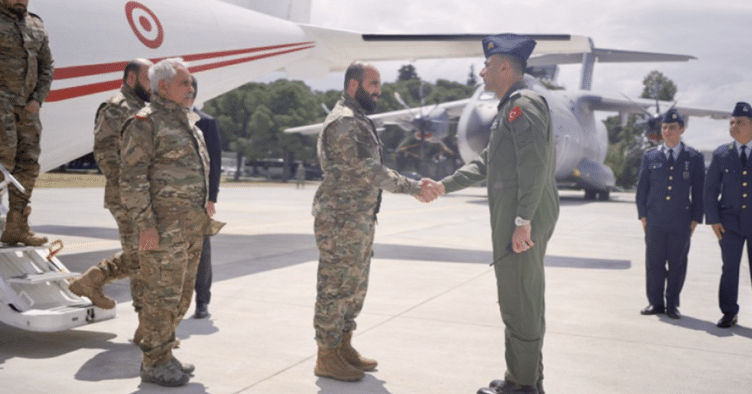
The trend of rapprochement between Ankara and Damascus continued throughout May, reflecting the deepening Turkish influence over the shaping of the security and military institutions of the new Syria.
One of the clearest manifestations of this trend was the Syrian military’s first participation in the international military exercise EFES 2026, held in western Turkey. This marked the first time Syrian forces had taken part in a military exercise outside Syria since the reorganization of the army following the fall of the Assad regime.
At the same time, on May 22, Turkish intelligence chief İbrahim Kalın visited Damascus and met with President Ahmad al-Sharaa, Foreign Minister Asaad al-Shaibani, and Syrian Intelligence Chief Hussein Salama. The very fact that such a high-level meeting took place underscores Turkey’s central role in shaping the security agenda of the new Syria.
The issue of the SDF remained at the center of the discussions. Turkey continues to view Kurdish military and political structures as a strategic threat and emphasized to Damascus the need to complete the integration of Kurdish forces into the Syrian military while preventing the continued existence of independent armed formations or their transition into underground activity.
The cooperation was not limited to declarations. On May 24, reports emerged of a joint Syrian-Turkish security operation that resulted in the arrest of ten ISIS operatives inside Syrian territory. According to the reports, Turkish intelligence monitored operatives of Turkish origin active in Syria and shared information with the Syrian side, enabling the arrests to take place. The operation demonstrated the high level of intelligence coordination between the two countries and Turkey’s willingness to operate within the Syrian arena not only to protect its borders, but also to influence the development of the new regime’s security apparatus.
Turkey is no longer merely an external actor involved in Syria; it has become a key partner in the state-building process. From Damascus’s perspective, the cooperation provides security assistance, military training, and regional legitimacy (see our May 2026 report on Turkey’s military buildup and its impact on Syrian force development). From Ankara’s perspective, it represents an opportunity to shape its strategic environment, reduce the Kurdish threat, and ensure that post-Assad Syria develops in a manner consistent with Turkish security interests. At the same time, the deepening reliance on an external actor raises questions regarding the degree of independence of Syria’s new state institutions and their ability to make strategic decisions without significant external influence.
Deepening Cooperation Between Damascus and Moscow
According to a report by The Wall Street Journal, Russia recently delivered supplies and equipment to the Hmeimim Air Base in Latakia Governorate, a move that may indicate its intention to maintain a significant military foothold in Syria. This report follows earlier publications indicating that Moscow has continued to supply Syria with wheat, oil, and other essential goods, including through vessels subject to Western sanctions. These measures reflect Russia’s commitment to preserving its influence in Syria, which it views as a key strategic asset in the Eastern Mediterranean.
At the same time, Syria’s leadership appears to be maintaining a pragmatic approach toward its relationship with Moscow. Despite efforts to expand ties with Arab states and other international actors, Damascus is not rushing to forgo Russian support, which remains an important source of economic, security, and political assistance. The continued cooperation between the two sides suggests that shared interests still outweigh existing differences and that Russia remains a central actor in shaping Syria’s evolving reality.
From a broader perspective, recent developments indicate that Syria continues to pursue a foreign policy based on balancing between different centers of power while leveraging competition among them to advance its national interests. For Russia, maintaining a military presence and political influence in Syria enables it to preserve regional leverage and reinforce its position in the Middle East, despite the challenges and resources it continues to invest in other theaters.
The Real Test Still Lies Ahead
Syria’s central challenge today is not merely the physical reconstruction of cities and infrastructure. The challenge is building a functioning state.
So far, the new regime has succeeded in creating an appearance of stabilization: international relations are improving, sanctions are being gradually lifted, and levels of violence have declined compared to the years of war. Yet beneath these achievements, deep-rooted problems remain unresolved – weak state institutions, centralized governance, sectarian tensions, economic uncertainty, and the continued presence of armed actors.
Therefore, the key question is not whether Syria has entered a phase of reconstruction, but whether it is succeeding in creating the conditions necessary for sustainable stability. At present, the answer remains far from clear.


